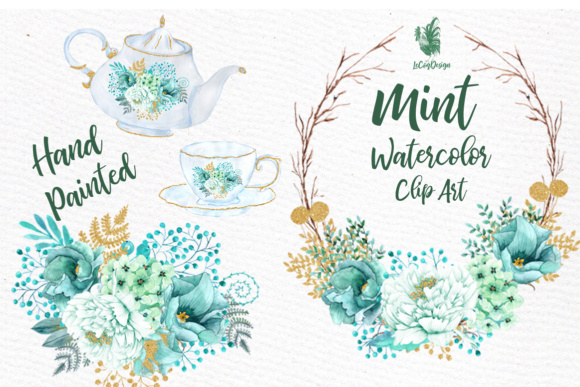
Mint Watercolor Florals: Elegant Clipart for Wedding & Brand Design
There's a particular kind of beauty in watercolor—the way pigment blooms on wet paper, the soft edges that feel alive, the slight imperfections that make each brushstroke unique. When you're working on a wedding invitation, a brand identity, or a social media campaign, these organic qualities can transform a flat digital design into something that feels genuinely crafted. Mint watercolor clipart brings that handmade aesthetic directly into your creative toolkit, offering a collection of floral elements that carry the warmth and authenticity of original artwork.
The Visual Appeal of Hand-Painted Floral Elements
What sets this particular collection apart is its origin. Every floral wreath, basket, and individual bloom in the Mint Watercolor Clipart set was hand-painted—no digital shortcuts, no filters applied to photographs. The result is a set of design assets that feel cohesive yet distinctly organic. The mint color palette works beautifully as a soft, contemporary alternative to traditional green, offering a cool sophistication that pairs well with neutrals, golds, blush pinks, and deep navy.
The set includes four high-resolution PNG files at 300 DPI, with elements sized at approximately 12 by 10 inches. That resolution matters more than you might think. At 300 DPI, these florals maintain their crisp detail whether you're printing them on a large-format poster or scaling them down for a small product tag. The transparent backgrounds on PNG files mean you can layer them over any color, texture, or photograph without awkward white boxes or time-consuming masking.
For anyone who has tried to source quality floral graphics, you know the frustration: stock images that look generic, vector florals that feel sterile, or watercolor packs where every element looks suspiciously similar. Original, hand-painted artwork carries a different energy. It reads as intentional, curated, and premium—exactly the impression most brands and projects want to make.
Where These Florals Shine: Practical Applications Across Projects
The versatility of a well-crafted floral clipart set extends far beyond wedding stationery, though that's certainly a natural starting point. Wedding invitations, save-the-dates, and day-of signage benefit enormously from watercolor florals because the medium itself evokes romance and artistry. A floral wreath framing a couple's names on a menu card, or a delicate floral basket accent on a thank-you note—these details elevate the entire event's visual story.
But the applications go much further. Consider how these elements work in branding projects. A small boutique, a florist, a wellness brand, or a skincare company might use a floral wreath as a central logo mark or incorporate individual blooms into a broader brand identity system. The mint palette feels fresh and modern without being trendy in a way that will date quickly. It suggests growth, calm, and natural elegance—qualities many brands want to communicate.
Packaging design is another area where watercolor florals excel. Product labels, box designs, tissue paper patterns, and shopping bag graphics all benefit from the tactile quality that hand-painted elements bring. A candle company, a tea brand, or a handmade soap business could use these florals across their entire product line to create visual consistency that customers recognize instantly on a shelf or in an Instagram feed.
For content creators and bloggers, these assets solve a recurring problem: how to create visually rich graphics without spending hours in Illustrator or hiring an illustrator for every post. A floral border around a quote graphic, a subtle wreath behind a podcast episode number, or a cluster of blooms in the corner of a Pinterest pin—these small touches dramatically increase engagement because they signal quality and care.
Building Visual Consistency and Brand Recognition
One of the most practical benefits of having a cohesive set of floral design assets is the ability to maintain visual consistency across every touchpoint. Brand recognition doesn't come from a single logo—it comes from a consistent visual language that customers encounter repeatedly. When your website header, your email newsletter, your product packaging, and your social media templates all share the same floral vocabulary, you're building a recognizable identity without saying a word.
This is where the concept of a curated design toolkit becomes genuinely valuable. Rather than grabbing different floral elements from different sources each time you start a new project—resulting in a mismatched collection of styles, color palettes, and quality levels—working from a single, well-designed set ensures that everything feels connected. The mint watercolor florals in this collection were painted by the same hand, which means the brushwork, the color mixing, and the overall aesthetic are naturally harmonious.
Think about how a wedding stationer might use these elements. The save-the-date features a floral wreath. The invitation uses a floral basket arrangement. The RSVP card incorporates a smaller cluster. The day-of signage echoes the same motifs. The thank-you card brings the theme full circle. Each piece feels distinct, yet together they tell a unified visual story. That's the power of working with a thoughtfully designed asset collection.
Pairing Florals with Typography for Maximum Impact
Floral clipart rarely stands alone—it almost always interacts with type. The pairing decisions you make will determine whether your design feels polished or chaotic. With watercolor florals, especially in a soft mint palette, you have several strong typographic directions available.
A clean sans serif font creates a beautiful contrast with the organic, hand-painted quality of the florals. The modern simplicity of the letterforms lets the watercolor elements breathe, and the combination feels contemporary and approachable. Think of a wedding invitation where a geometric sans serif sits inside a floral wreath—the tension between structured type and loose brushwork creates visual interest.
For a more romantic or traditional feel, a script font paired with watercolor florals is a classic combination. The flowing letterforms echo the movement of the painted petals and stems. The key here is restraint—choose a script that's legible at the size you'll be using it, and make sure the weight of the letterforms doesn't get lost against the detail of the florals.
Serif fonts offer yet another direction, particularly for editorial layouts or brand identities that want to feel established and trustworthy. A refined serif typeface with delicate watercolor accents can communicate heritage and quality—ideal for luxury brands, law firms with a creative edge, or high-end product lines.
Whatever direction you choose, test your pairings at actual size before committing. What looks balanced on a large monitor might feel cramped on a business card or illegible on a mobile screen. Print a test copy when possible. View it from a distance. Ask someone unfamiliar with the project if the text is easy to read. These simple checks prevent costly revisions later.
Licensing, File Formats, and Working Smart
Before incorporating any design asset into a commercial project, understanding the licensing terms is essential. The fact that these florals represent original, hand-painted artwork means the creator holds the copyright, and the terms of use will dictate how you can apply them. For most creative professionals, the critical question is whether the license covers commercial use—can you use these elements in designs you sell, in client work, or in products you manufacture? Always review the specific license provided with your purchase to ensure your intended use aligns with the terms.
The PNG format at 300 DPI gives you flexibility across both digital and print applications. For web use, you'll likely resize and optimize the files for faster loading—tools like TinyPNG or Photoshop's Save for Web function handle this easily. For print, the high resolution ensures sharp reproduction on everything from business cards to large banners. The transparent background is particularly valuable for layering, allowing you to place these florals over any background color or image without additional editing steps.
A practical tip for working with floral clipart: create a library system that works for your workflow. Organize elements by type—wreaths, baskets, individual stems, clusters—so you can quickly find what you need when a project deadline is approaching. Save color-adjusted versions if you modify the palette for a specific client. Build template files in your design software with your most-used arrangements already positioned. These small efficiency gains compound over dozens of projects.
For designers and creative entrepreneurs, investing in quality original artwork like these mint watercolor florals is ultimately about respecting both your own work and your audience's attention. Generic, overused graphics communicate indifference. Hand-painted, thoughtfully created design assets communicate care—and that distinction is something your clients and customers will notice, even if they can't articulate exactly why one design feels more premium than another.